
Whiplash Team, 26 December 2025
Brands in times of uncertainty: design, resilience and adaptation
Economic, political and technological uncertainty has become the constant backdrop against which brands now operate. In this context, design and branding strategy play a crucial role in sustaining resilience, maintaining relevance and building trust.
Market volatility, geopolitical tensions, climate crises and technological acceleration force organisations to adapt continuously. The concept of VUCA—volatility, uncertainty, complexity and ambiguity—has gained traction as the best description of this scenario.
According to the Edelman Trust Barometer 2025, trust in institutions and businesses remains fragile, with 61% of people believing that business leaders fail to act with sufficient transparency in times of crisis. This widespread mistrust presents a direct challenge to branding: how can brands inspire stability when the environment itself is unstable?
Design as an anchor of coherence
Design here plays a fundamental role. It is not simply about creating attractive visual identities, but about conveying consistency and clarity at every touchpoint. In uncertain times, audiences look for orientation, and design can provide that compass.
A telling example is Airbnb, which during the 2020 pandemic reformulated its value proposition with a renewed emphasis on the concept of “belonging anywhere”. Its visual and narrative language shifted to highlight safety, trust and community, at a time when travel had become a source of anxiety.
Resilience through identity
A brand’s resilience is measured not only in financial terms, but also in its ability to sustain a clear identity over time. This requires having a defined purpose that serves as a guide when the external context changes.
Harvard Business Review has noted that companies with a strong purpose and shared values demonstrate superior capacity to maintain employee and customer commitment during periods of crisis. That purpose acts as a beacon, guiding strategic decisions and preventing short-term distractions from diluting long-term focus.
Adaptation without losing authenticity
Adaptation does not mean becoming unrecognisable. Brands must strike a balance between flexibility and authenticity: evolving quickly while remaining true to the essence that gives them credibility.
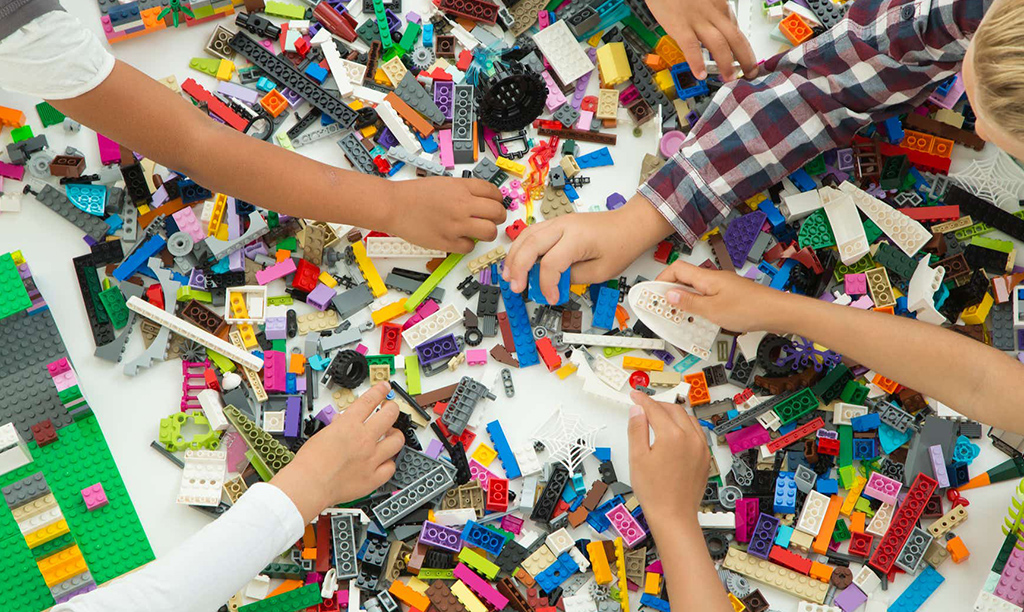
A paradigmatic example is Lego, which over recent decades has weathered several financial and business-model crises, yet managed to reinvent itself through digital innovation and strategic partnerships—without losing sight of its mission to “inspire the builders of tomorrow”. This capacity to adapt while maintaining a core identity explains the brand’s enduring strength, even in adverse contexts.
Towards antifragile branding
The goal should not be merely to withstand crises, but to grow stronger through them. Nassim Nicholas Taleb coined the concept of antifragility to describe systems that not only endure volatility, but benefit from it. Applied to branding, this means designing brands prepared to experiment, learn quickly and grow in shifting scenarios.
Uncertainty, therefore, is not solely a threat. It is also fertile ground for brands that know how to use design and strategy as engines of adaptation and transformation. In the face of volatility, branding becomes both the anchor that ensures continuity and the catalyst that enables evolution.